Gingival inflammation without bone destruction: catarrhal and hyperplastic
ICD-10: K05.0–K05.1
Definition
Gingivitis is inflammation of the gingiva that does not involve destruction of the junctional epithelium or alveolar bone. This fundamentally distinguishes it from periodontitis, in which bone loss occurs. Gingivitis is reversible when the etiological factor is eliminated.
Gingivitis is the most prevalent periodontal disease: WHO data indicate it affects 80–95% of the population across age groups. The primary etiological factor is dental plaque (microbial biofilm).
ICD-10 Code: K05.0–K05.1 — K05.0 — acute, K05.1 — chronic
Alveolar bone: Intact — Key distinction from periodontitis
Periodontal pocket: Absent — Pseudopocket in hyperplastic form
Reversibility: Yes — When plaque is eliminated
PMA index: 0–100% — Assesses gingivitis extent
GI index: 0–3 — Löe–Silness gingival index
Classification
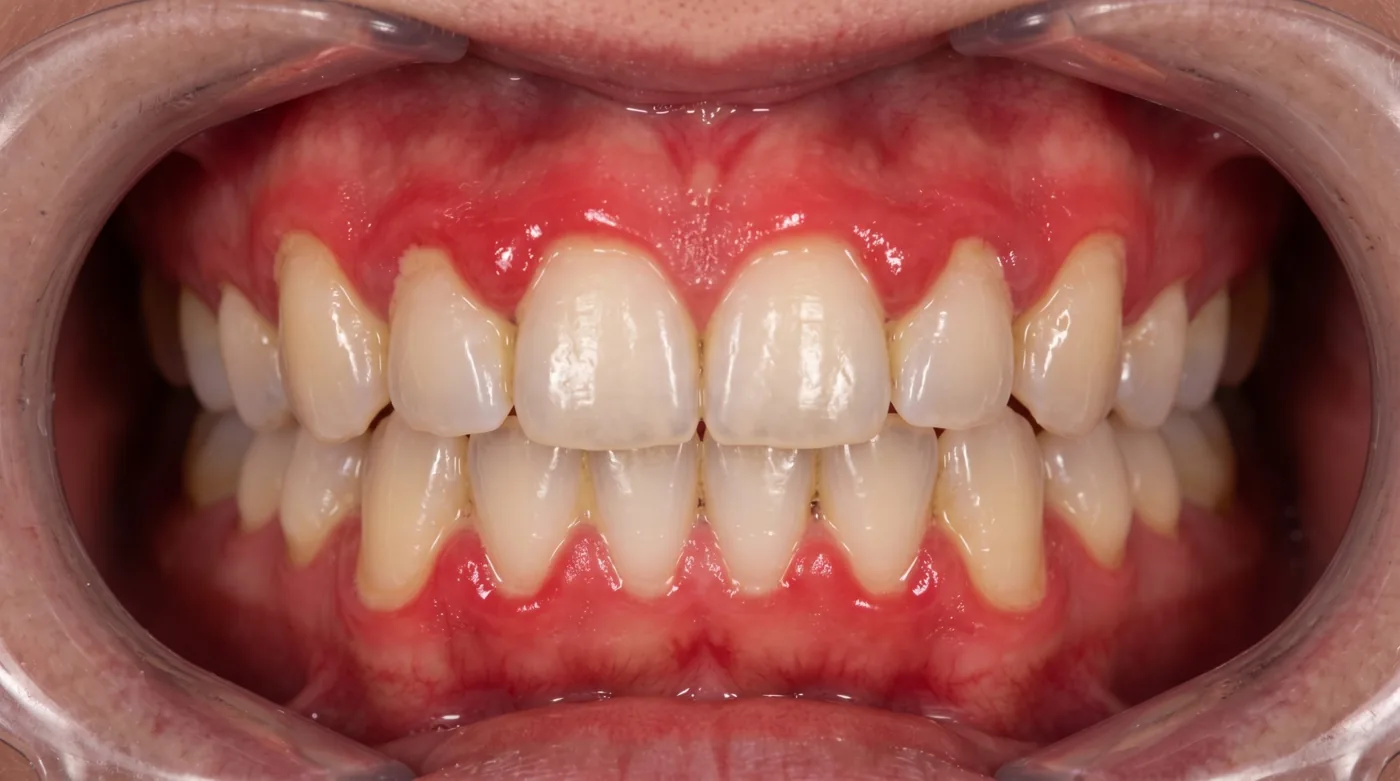
K05.0 / K05.1 Chronic plaque-induced gingivitis (legacy catarrhal) (acute/chronic) — Most common form. Gingiva erythematous, oedematous, bleeds on probing. No bone destruction. Patient complains of bleeding on brushing.
K05.1 Hyperplastic gingivitis — Gingival tissue overgrowth. Fibrotic form — firm painless enlargements (often drug-induced: phenytoin, cyclosporine, nifedipine). Oedematous form — soft bluish enlargements.
A69.1 Necrotizing ulcerative gingivitis (Vincent's) — Acute condition. Necrosis and ulceration of interdental papillae. Characteristic fetid odour, pain, systemic reaction (fever). Causative organisms: fusobacteria and spirochetes.
K05.1 Hormonal (pregnancy) gingivitis — Enhanced periodontal response to bacteria during hormonal changes (pregnancy, puberty, menopause). Marked papillary hyperplasia.
Clinical Features
Bleeding on brushing — Chief complaint. Occurs during toothbrushing and with firm foods. Bleeding on probing (BOP+) — the objective criterion of inflammation.
Gingival erythema and oedema — Gingiva bright red (acute catarrhal) or bluish-red (chronic). Loses normal pale-pink color and scalloped contour.
Pain and itching in gingiva — Mild pain on touch and chewing. Itching — in chronic gingivitis.
Altered gingival contour — Papillae oedematous, enlarged, partially covering the crown. In hyperplastic form — pronounced overgrowths.
Periodontal Indices
| Method | Finding | Note |
|---|---|---|
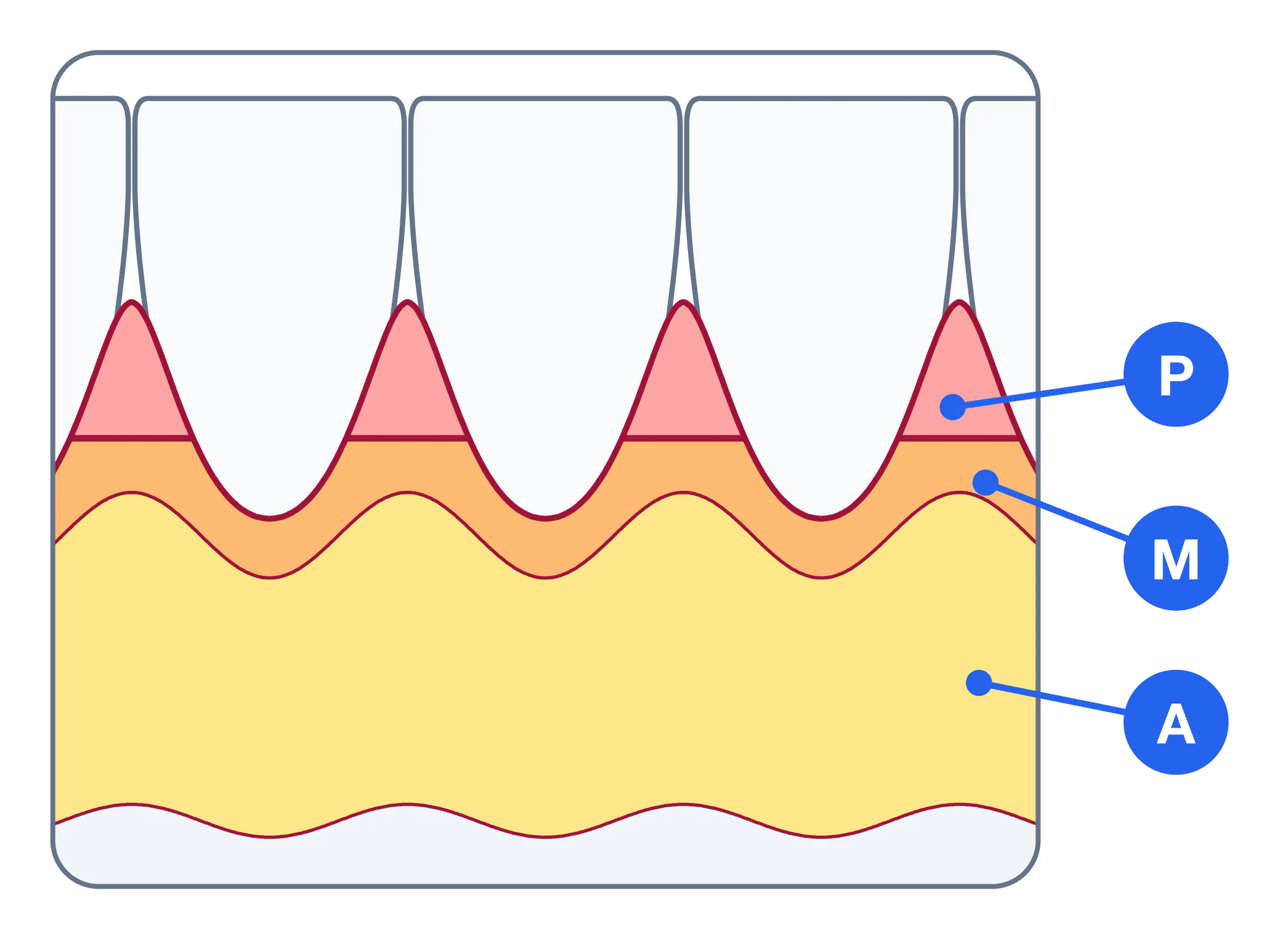
| PMA Index (Parma) | Percentage of affected units (Papilla P, Marginal M, Attached A gingiva). Normal: 0% | Assesses gingivitis prevalence |
| Gingival Index GI (Löe–Silness) | 0 — normal; 1 — mild (color change, no BOP); 2 — moderate (BOP on probing); 3 — severe (spontaneous bleeding) | Assesses inflammation severity |
| Plaque Index PLI (Silness–Löe) | 0–3 by amount of plaque at the gingival margin. Normal: <1 | Assesses oral hygiene — cause of gingivitis |
| Probing depth | Sulcus depth ≤3 mm in gingivitis. BOP+ = sign of inflammation | BOP+ without attachment loss = gingivitis |
Treatment
Professional oral hygiene — Removal of supra- and subgingival calculus and plaque. Ultrasonic scaler + hand curettes. Tooth surface polishing. The foundation of treatment — nothing else works without this. (Ultrasonic scaler, curettes)
Oral hygiene instruction — Bass technique — most effective for sulcular decontamination. Dental floss, water irrigator, interdental brushes. Review appointment in 2–4 weeks. (Soft toothbrush, floss, irrigator)
Antiseptic rinses — 0.05–0.12% chlorhexidine (max 2 weeks), 0.05% cetylpyridinium chloride for severe inflammation. Prolonged chlorhexidine not recommended due to tooth staining. (Chlorhexidine 0.05–0.12%) (7–14 days)
Risk factor elimination — Correct overhanging restorations, replace ill-fitting prostheses. Manage systemic conditions (diabetes, haematological disease). Modify or substitute medications in drug-induced hyperplastic gingivitis.