Dystrophic periodontal disease without inflammation: clinical features and distinction from periodontitis
ICD-10: K05.4
Definition
Periodontosis (ICD-10: K05.4) is a non-inflammatory, dystrophic disease of the periodontium characterized by atrophy and sclerosis of alveolar bone without periodontal pocket formation and without primary inflammation. It accounts for less than 5% of all periodontal diseases. The term “periodontosis” is retained from the national (post-Soviet) classification; the current international classification of periodontal diseases (AAP/EFP, 2017) has no corresponding separate entity.
Periodontosis is frequently confused with periodontitis, but they are fundamentally different conditions. In periodontosis, the gingiva is pale, firm, and non-inflamed. There are no periodontal pockets and no bleeding on probing.
ICD-10 Code: K05.4 — Periodontosis
Inflammation: Absent — Key distinction from periodontitis
Pocket: Absent — Recession present but no pocket
Prevalence: <5% — Of all periodontal diseases
Etiology: Dystrophy — Neurotrophic and vascular disturbances
X-ray: Bone sclerosis — Dense trabecular pattern, horizontal resorption
Periodontosis vs. Periodontitis
| Feature | Periodontosis | Periodontitis |
|---|---|---|
| Gingival inflammation | No (pale, firm gingiva) | Yes (erythema, oedema) |
| Bleeding on probing | No | Yes (BOP+) |
| Periodontal pocket | Absent | Present (>3 mm) |
| Gingival recession | Yes (bilateral symmetrical root exposure) | Possible in severe |
| Tooth mobility | Absent for a long time | Present in moderate/severe |
| Suppuration | No | Possible |
| Radiograph | Bone sclerosis, dense trabecular pattern | Destruction, angular defects |
| Calculus | Minimal | Abundant subgingival |
| Rate of progression | Slow (years) | Moderate / rapid |
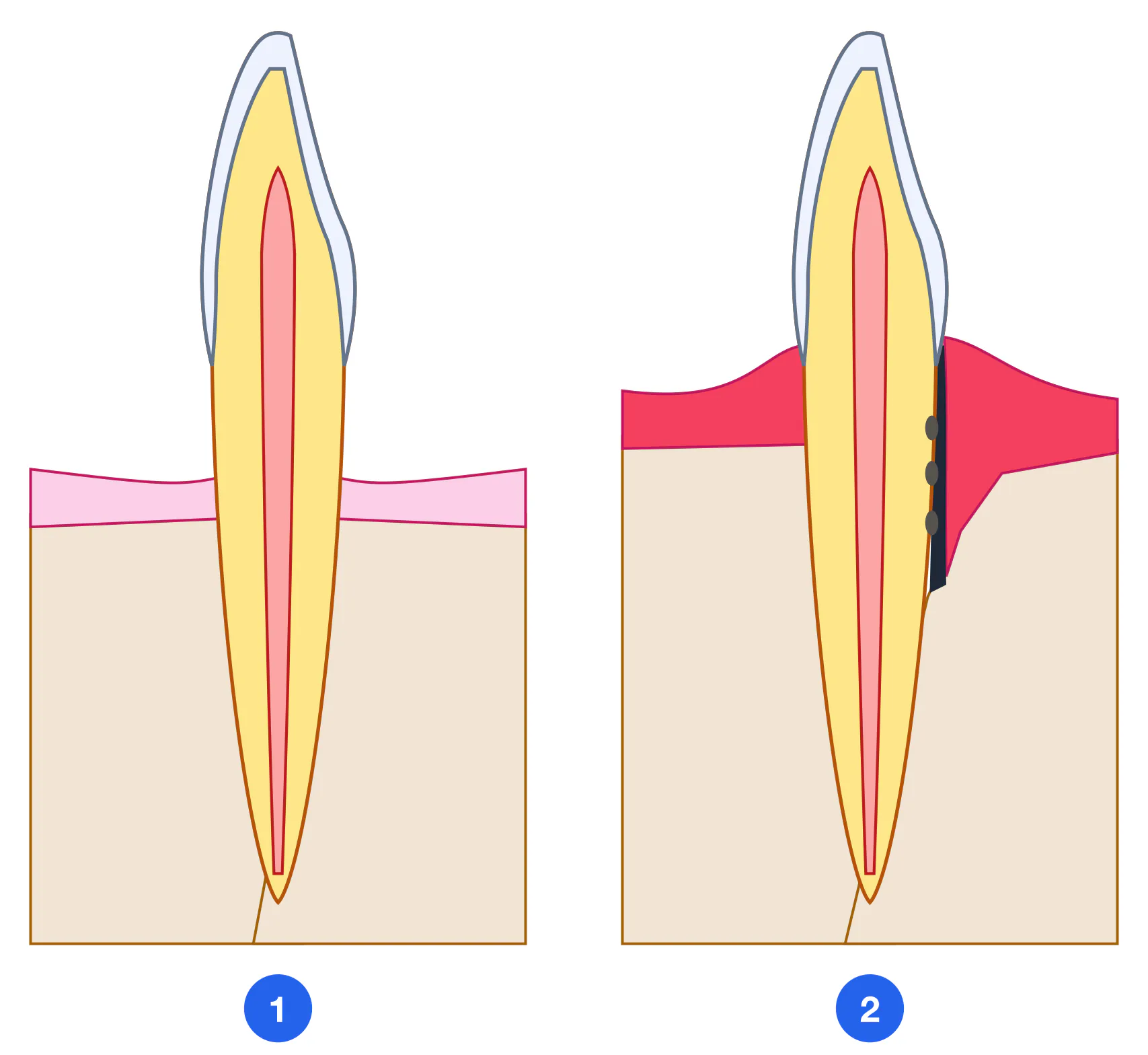
Clinical and Radiographic Features
Gingival recession — Bilateral symmetrical root exposure without inflammation. Gingiva pale, firm, attached. Creates cervical sensitivity.
Dentinal hypersensitivity — Pain from thermal, chemical, and mechanical stimuli on exposed root surfaces.
Tooth crowding — Gradual positional change of teeth as bone atrophies. Very slow progression.
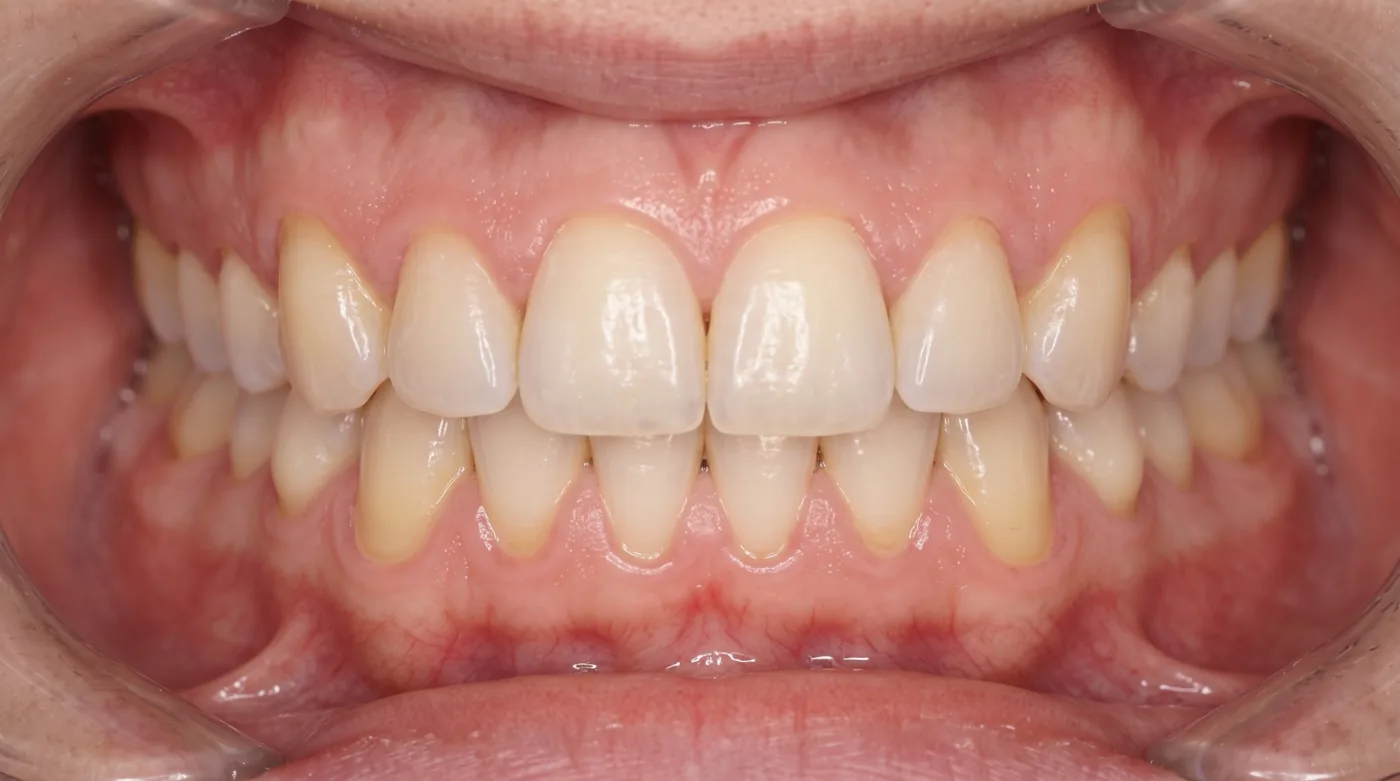
Treatment
Hygiene and plaque control — Professional hygiene (no pocket — supragingival scaling). Teach atraumatic brushing technique. Soft toothbrush. (Soft toothbrush)
Hypersensitivity management — Remineralising therapy (fluoride varnish, CPP-ACP). Desensitisers on exposed surfaces. Sealing of dentinal tubules. (Fluoride varnish, Bifluorid 12, Clinpro)
Recession coverage (surgery) — For significant recession: coronally advanced flap, connective tissue graft (CTG). Covers exposed roots and restores attached gingiva. (Connective tissue graft)
Systemic support — Manage systemic conditions (atherosclerosis, diabetes, neuropathy). Vitamin therapy (A, E, C). Physiotherapy: electrophoresis, d'Arsonval. (Vitamins, physiotherapy)