Stomatitis, aphthous ulcers, cheilitis — classification and clinical features
ICD-10: K12
Introduction
Oral mucosal diseases are a broad group of pathological conditions involving the oral epithelium and underlying tissues. The most common are stomatitis, aphthous ulcers, and cheilitis. Many oral mucosal conditions are manifestations of systemic diseases.
Stomatitis: K12.0 — Recurrent oral aphthae (RAS)
Cheilitis: K13.0 — ICD-10: various forms
Leukoplakia: K13.2 — Premalignant condition
Glossitis: K14 — ICD-10: tongue diseases
Oral candidiasis: B37.0 — Fungal stomatitis (thrush)
Herpes: B00.2 — Herpetic gingivostomatitis
Stomatitis
K12.0 Recurrent aphthous stomatitis (RAS, recurrent oral aphthae) — Most common oral mucosal condition. Painful solitary or multiple ulcers (aphthae) with a smooth edge and fibrinous slough, surrounded by a red halo. Diameter in minor (most common) RAS 2–10 mm (up to 1 cm); these heal without scarring in 7–14 days. Recur several times per year. Etiology unknown (immune dysregulation). Per Shafer’s, RAS subtypes: minor RAS (Mikulicz aphtha, ≤10 mm), major RAS (Sutton’s, >10 mm with scarring), herpetiform RAS.
B00.2 Acute herpetic gingivostomatitis — Primary HSV-1 infection. Marked systemic reaction (fever, lymphadenopathy). Multiple vesicles rupturing into painful erosions. Gingival and mucosal involvement. Self-limiting in 10–14 days. Treatment: acyclovir.
B37.0 Oral candidiasis (thrush) — Candida albicans fungal infection. White plaques that can be wiped off (leaving erythematous surface). Common in neonates, elderly, immunocompromised. Treatment: fluconazole, nystatin.
A69.1 Necrotizing ulcerative gingivostomatitis (Vincent's) — Severe form (the WHO ICD-10 code A69.1 covers Vincent's angina / NUG / Vincent's gingivostomatitis). Mucosal necrosis, marked pain, fetid odor, systemic reaction. Causes: immunodeficiency, severe systemic disease. Note: ICD-10 K12.2 covers cellulitis and abscess of mouth, not this entity.
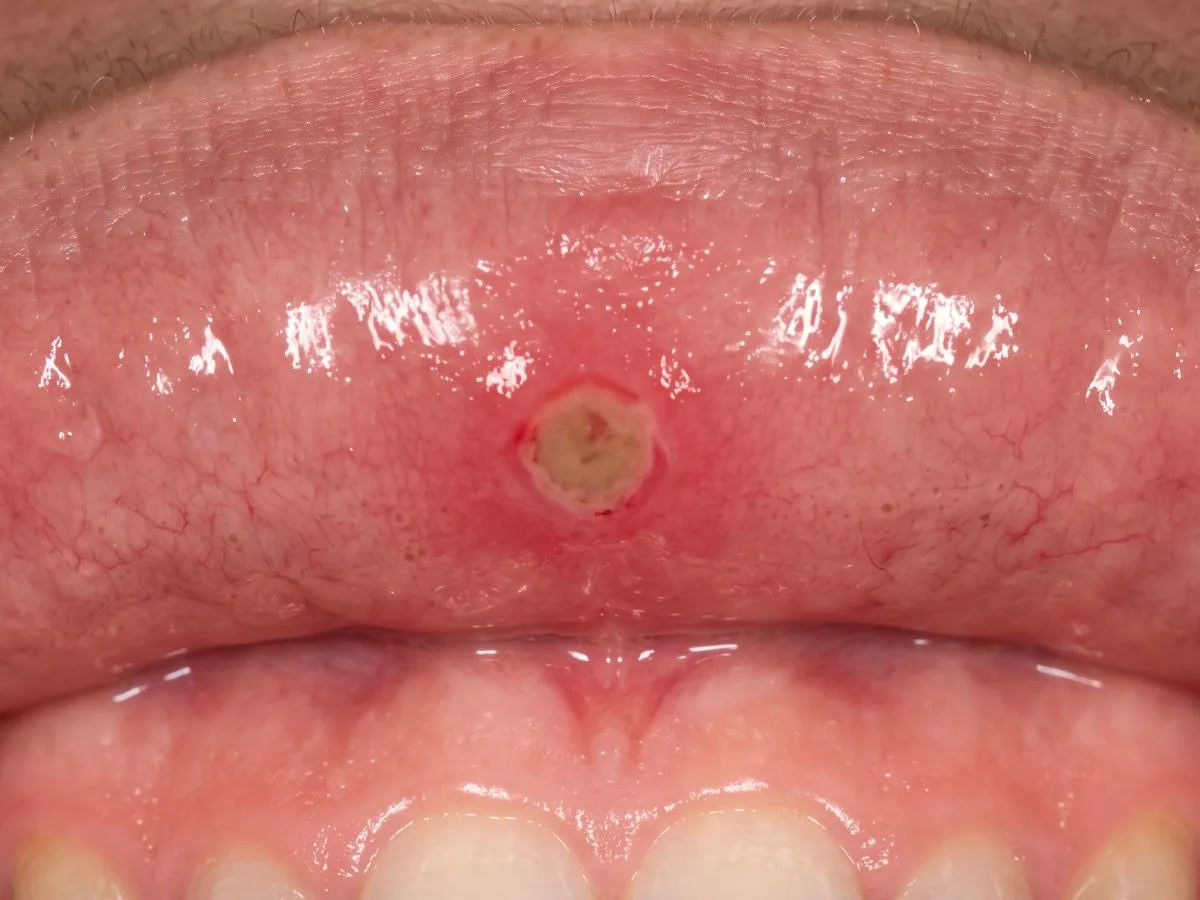
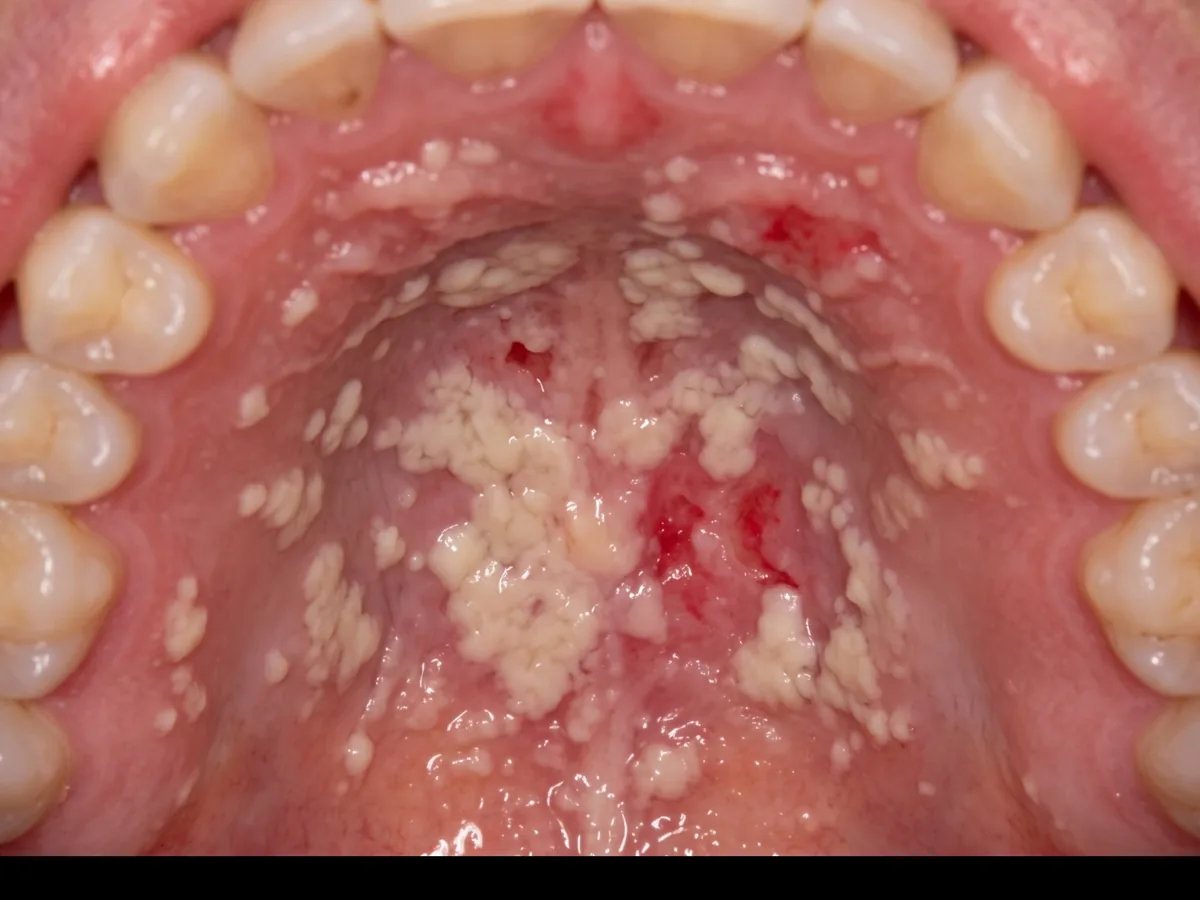
Recurrent aphthous stomatitis — an aphtha on the oral mucosa (a); oral candidiasis — white plaque on the palate (b) AI-generated illustration.
Cheilitis
K13.0 Exfoliative cheilitis — Chronic inflammation of the vermilion border with scaling. Associated with neurogenic disturbances (neurosis). Dry and exudative forms.
K13.0 Contact allergic cheilitis — Reaction to lipstick, toothpaste, foodstuffs. Burning, itching, vermilion oedema, occasional vesicles. Identified by patch testing.
K13.0 Actinic/meteorological cheilitis — Chronic lip inflammation from climatic exposure (wind, cold, UV). Dryness, scaling, fissures. Occupational condition in outdoor workers.
K13.0 Manganotti's cheilitis (premalignant) — Obligate precancer. One or several crusted erosions on the vermilion of the lower lip. Does not re-epithelialize. Mandatory biopsy.
Differential Diagnosis: Aphtha vs. Herpes
| Feature | Recurrent aphthous stomatitis | Herpetic stomatitis |
|---|---|---|
| Age | Any | Predominantly children and young adults |
| Primary element | Aphtha (ulcer) from the outset | Vesicle → erosion |
| Location | Mobile mucosa (tongue, cheeks) | Any mucosa + gingiva |
| Systemic reaction | None or mild | Marked (fever, lymphadenopathy) |
| Healing | 7–14 days without scarring | 10–14 days without scarring |
| Recurrences | Several times per year | With immunodeficiency |
| Treatment | Antiseptics, topical steroids | Acyclovir, antivirals |